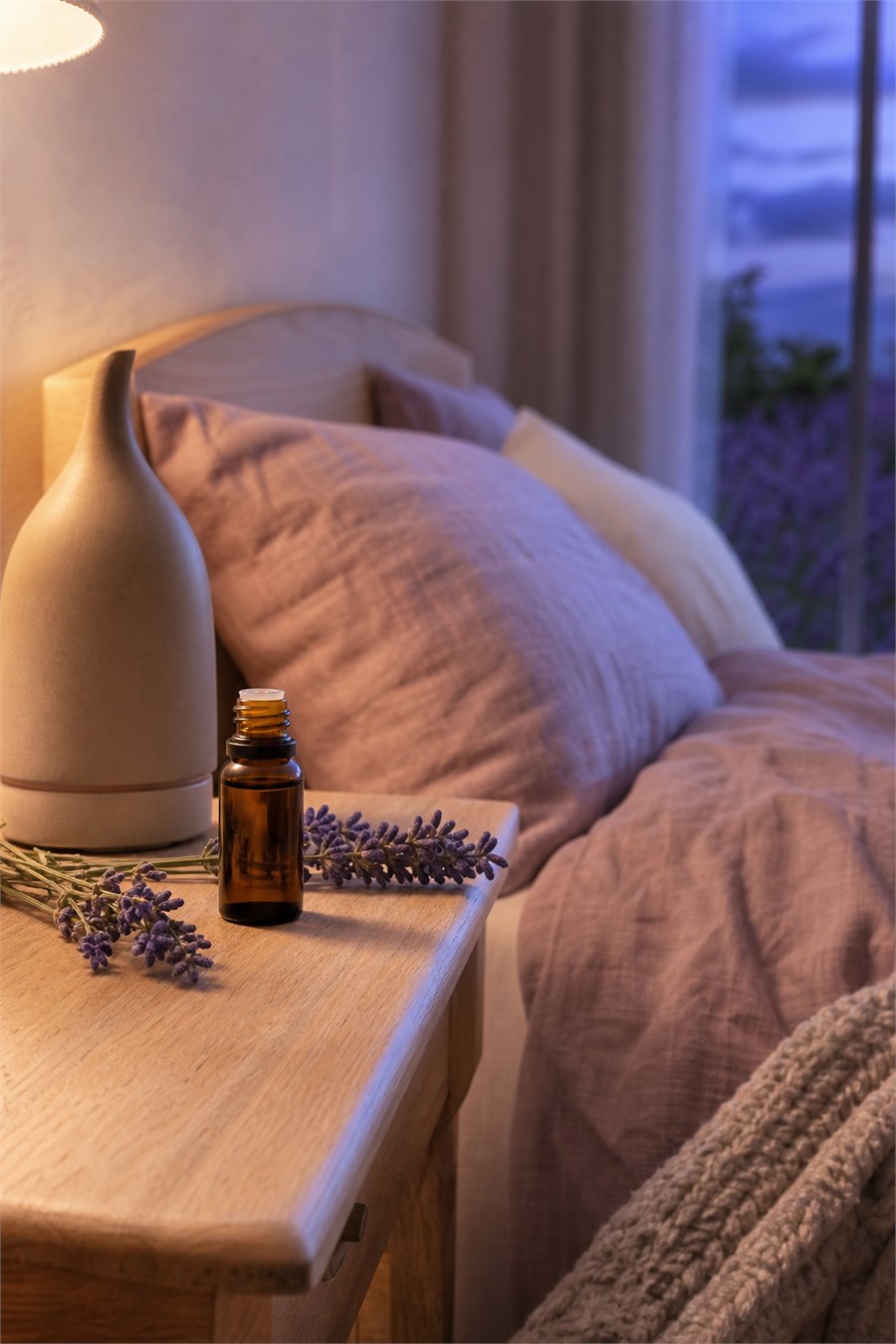
Build the cue, not an overpowering cloud.
NCCIH says evidence for lavender aromatherapy and sleep quality or insomnia is still unclear. A practical approach is to use a modest aroma as one part of a repeatable wind-down routine: dim lights, put away the phone, keep a regular bedtime and let lavender mark the transition.
Choose True Lavender
Its softer, lower-camphor profile is usually better suited to an evening atmosphere than brighter Lavandin.
Use less
Start with 3 drops per 100 mL water for 30 minutes. Stronger is not automatically more restful.
Repeat the context
Pair the same aroma with the same low-light, screen-free routine so the cue stays recognizable.
DIFFUSER
Quiet Night
- 3 drops
- True Lavender
- 2 drops
- Roman Chamomile
- 1 drop
- Cedarwood
- 100–150 mL
- Diffuser water
Run 30 minutes before bed, then switch off.
NO DIFFUSER
Cotton-pad cue
- 1 drop
- True Lavender
- 1 pad
- Cotton or folded tissue
Place near the bed but not directly under the nose or against skin. Keep away from children and pets.
When lavender is not the answer
Seek medical advice for persistent insomnia, loud snoring with breathing pauses, severe daytime sleepiness, depression or other ongoing symptoms. Lavender aroma may cause headache or coughing in some people; stop if it feels irritating.
For a softer evening profile
True Lavender has a softer floral-herbal profile for evening and diluted body-care rituals.
Related guides
Source: NCCIH: Lavender—Usefulness and Safety. Educational information only; updated July 29, 2026.