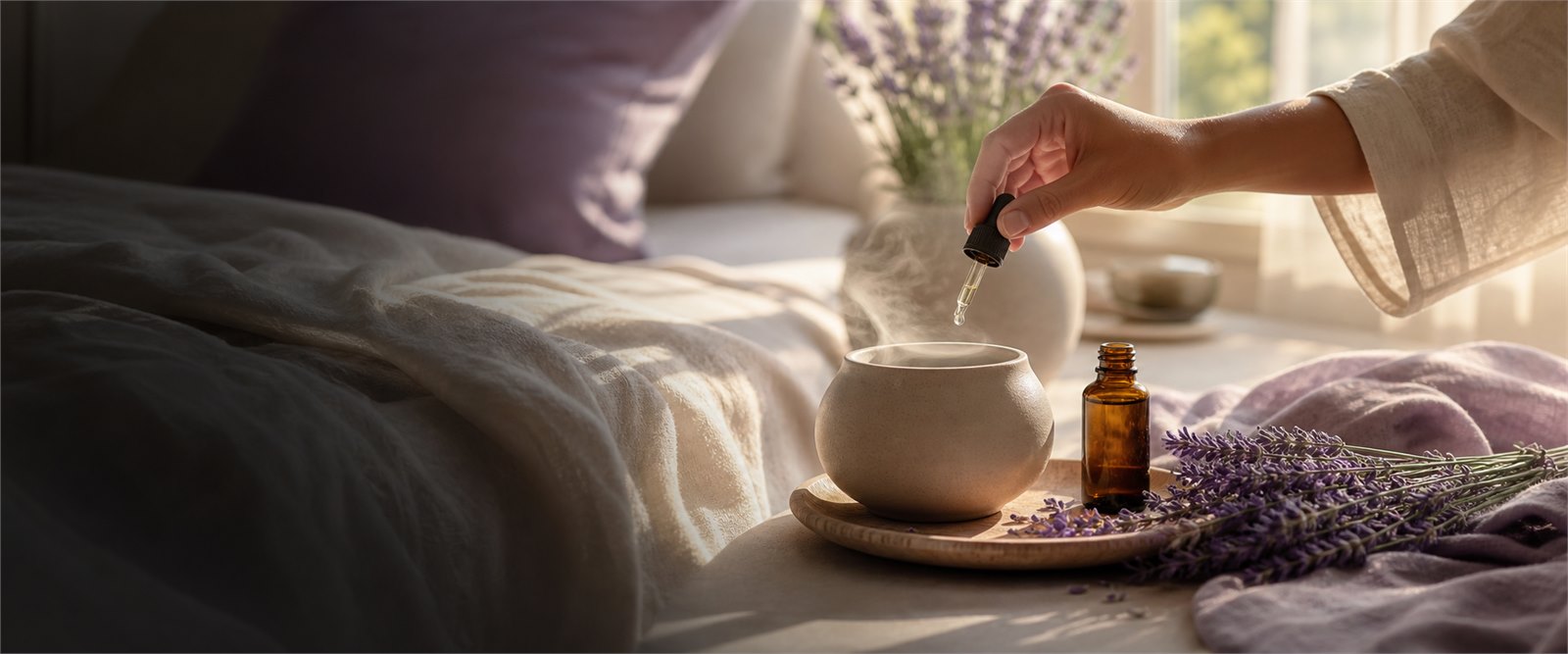
The value is fragrance and ritual—not a skin-condition cure.
FDA treats claims to treat disease or change the structure or function of skin as drug claims. NCCIH also notes that topical lavender products may cause allergic reactions. Keep claims and use conservative: dilute, patch-test and stop at the first sign of irritation.
| Use | Lavender | Carrier | Approx. dilution |
|---|---|---|---|
| Facial aroma oil | 1 drop | 30 mL jojoba | about 0.17% |
| Everyday body oil | 2 drops | 10 mL jojoba | about 1% |
| Body oil, stronger aroma | 4 drops | 10 mL carrier | about 2% |
Measure
Use a clean amber bottle and exact carrier volume. Drop size varies, so percentages are approximate.
Patch-test
Apply a small amount to the inner arm. Wait 24 hours before using on a larger area.
Watch the skin
Stop if redness, itching, burning or swelling appears. Do not apply to broken or already irritated skin.
Skin conditions need the right care
Do not market or use lavender oil as a treatment for acne, eczema, psoriasis, infection, burns, wounds or allergic rashes. Ask a clinician about persistent or worsening symptoms. Avoid eyes and mucous membranes; do not ingest.
A softer profile for diluted body care
True Lavender has a softer floral-herbal profile for evening and diluted body-care rituals.
Related guides
Sources: FDA: Aromatherapy · NCCIH: Lavender safety. Educational information only; updated July 29, 2026.