PRACTICAL VALUE FOR WASH DAY
5 Practical Benefits and Uses of Lavender Oil for Hair
These benefits describe a carefully diluted cosmetic routine: fragrance, carrier-oil slip, a short scalp massage and softer-feeling dry lengths. They are not promises of hair regrowth.
Adds a clean floral note to wash day
A measured amount of true lavender gives a pre-shampoo oil a soft herbal-floral aroma without using undiluted essential oil on the scalp.
Pairs easily with simple carrier oils
Jojoba works well for a lighter scalp blend, while argan can suit dry hair lengths. The carrier oil provides most of the slip and conditioning feel.
Can accompany cosmetic softness and shine
Jojoba or argan carrier oil can reduce friction and make dry lengths feel softer before shampooing. The carrier oil does most of this conditioning; lavender mainly contributes aroma.
Fits a gentle pre-shampoo massage
A low-dilution blend provides slip for a short fingertip massage without applying concentrated essential oil directly. Massage should feel comfortable—not hot, tingly or painful.
Creates a floral, calming self-care ritual
Lavender’s aroma can make wash day feel more relaxing. Treat that as a sensory benefit; it does not establish that lavender alone changes follicle growth or treats a hair-loss condition.
MEASURE BEFORE YOU MIX
Lavender oil dilution for hair and scalp
Drop size varies, so percentages are approximate. These conservative examples assume about 20 drops per milliliter and are for healthy adults using a wash-out preparation.
| Carrier oil | Lavender oil | Approx. dilution | Use |
|---|---|---|---|
| 10 mL | 1 drop | About 0.5% | Sensitive-skin starting point |
| 10 mL | 2 drops | About 1% | Short pre-shampoo massage |
| 15 mL | 3 drops | About 1% | Measured wash-out treatment |
| 30 mL | 3 drops | About 0.5% | Larger low-aroma batch |
A SIMPLE WASH-DAY METHOD
How to use lavender oil for hair safely
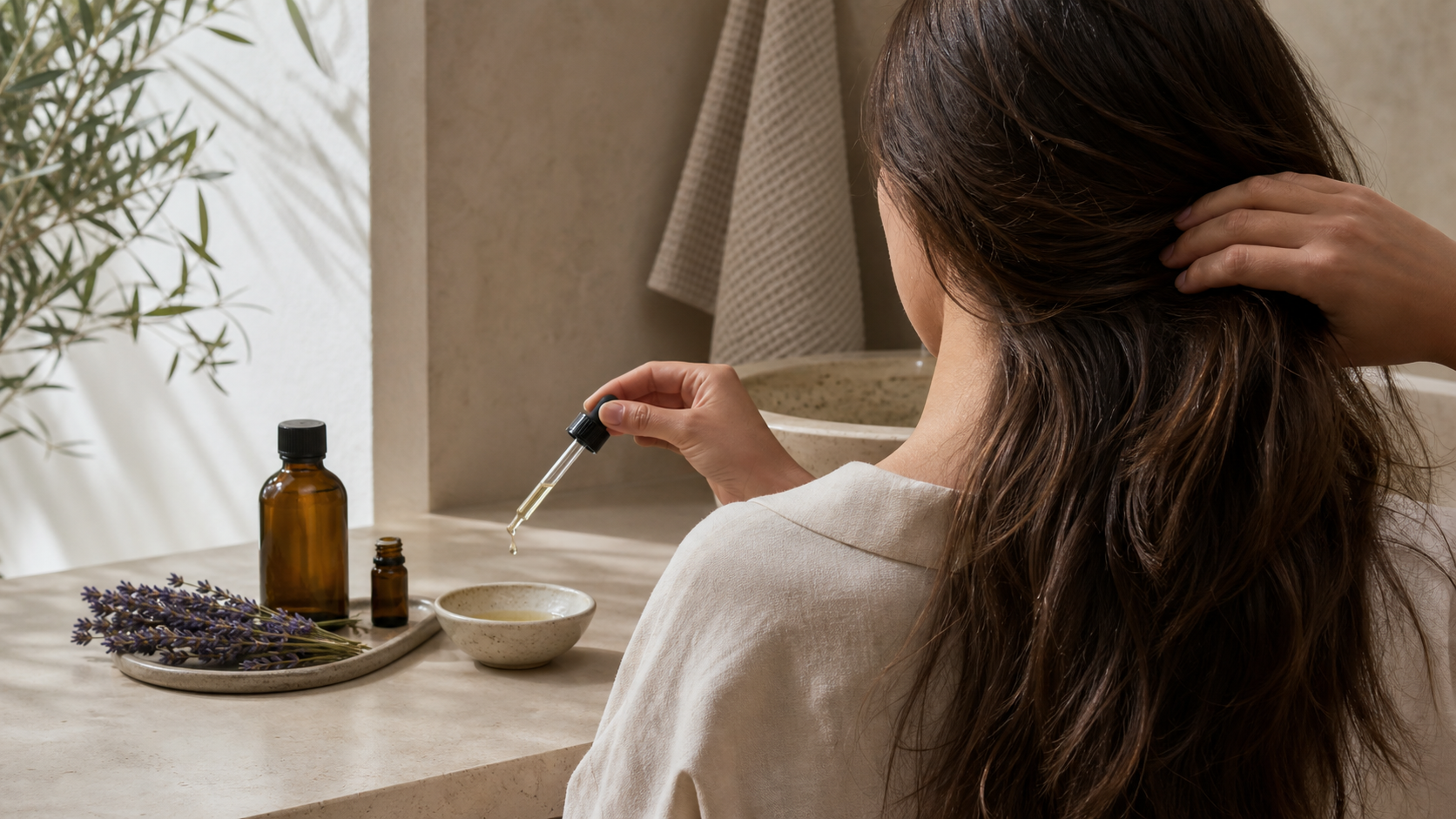
Blend before it touches your scalp
For a 1% adult wash-out oil, combine 3 drops of true lavender essential oil with 15 mL of jojoba oil. Patch-test the finished blend, not the undiluted essential oil.
Mix and patch-test
Combine the measured oils in a clean bottle. Test a little finished blend on the inner arm and wait 24 hours.
Apply sparingly
Part dry hair and massage a small amount with fingertips for two to three minutes. Do not scratch.
Wash it out
Start with 10–20 minutes, then shampoo thoroughly. Stop for burning, itching, redness or swelling.
SCALP · PRE-SHAMPOO
1% jojoba scalp oil
- 3 drops
- True lavender essential oil
- 15 mL
- Jojoba oil
- 10–20 min
- Before shampooing
HAIR LENGTHS · WASH-OUT
Low-aroma argan oil
- 1 drop
- True lavender essential oil
- 10 mL
- Argan oil
- 2–3 drops
- Finished blend for dry ends
BUY WITH A PURPOSE
What to Look for When Buying Lavender Oil for Hair
Not every bottle labeled “lavender oil” contains the same material. Use the label and supplier documentation to identify what you are actually buying.
| What to check | Why it matters |
|---|---|
| 100% essential oil | “Lavender fragrance oil” may contain synthetic fragrance materials and is not interchangeable with botanical essential oil. |
| Latin name | Look for the declared species, such as Lavandula angustifolia. Lavandin and other species have different chemical profiles and aromas. |
| Dark glass bottle | Amber or cobalt glass helps limit light exposure. Store the closed bottle away from heat and sunlight. |
| Ingredient disclosure | Check whether the product is undiluted essential oil or a ready-diluted carrier-oil blend so you can calculate the finished concentration correctly. |
| Batch and testing information | A batch number and supplier GC/MS report improve traceability. Organic certification addresses production standards; it does not prove hair-growth efficacy. |
Keep expectations realistic
Lavender essential oil appears in human studies only as part of multi-ingredient hair-oil formulas. Those results cannot show what lavender does by itself. Use the recipe on this page for aroma and a practical wash-day ritual—not as a promise to regrow hair.
What the research can—and cannot—tell you
1998: 86 people with alopecia areata used either a thyme, rosemary, lavender and cedarwood blend in jojoba and grapeseed oils, or carrier oils alone. After seven months, improvement was reported in 19 of 43 participants (44%) in the essential-oil group and 6 of 41 (15%) in the control group (P=.008).
2025: 90 healthy adults were assigned to rosemary–lavender oil, rosemary–castor oil or coconut oil for 90 days. The rosemary–lavender group showed reported gains in growth rate, thickness, density and length. The tested commercial formula contained multiple ingredients, and the manufacturer funded the study, so these results do not prove that lavender alone caused the changes.
Read the 1998 randomized trial and the 2025 randomized trial and disclosures.
When to skip DIY scalp oil
Do not apply essential oil to broken, inflamed, infected or recently treated skin. Avoid eyes and mucous membranes. Topical lavender can cause allergic skin reactions. Ask a clinician about use during pregnancy, breastfeeding or treatment for a scalp condition.
Sudden or patchy hair loss, scalp pain, sores, pus, severe scaling or rapidly worsening shedding deserves professional assessment.
COMMON QUESTIONS
Frequently asked questions about lavender oil for hair
Can I put lavender oil directly on my scalp?
No. Essential oil is concentrated. Dilute it in a carrier oil and patch-test the finished mixture first.
Can I leave lavender oil in my hair overnight?
A short wash-out treatment is the more cautious starting point. Longer contact can increase irritation and greasiness.
How often can I use a lavender scalp oil?
Start with once a week and see how easily it washes out and how your scalp responds. Stop if you notice itching, redness, burning or increased irritation.
Can lavender oil damage hair follicles?
The main concern is scalp irritation or allergy—not proof that one accidental use permanently destroyed follicles. Stop, wash gently and seek help if burning, swelling, blisters or unusual shedding persists.
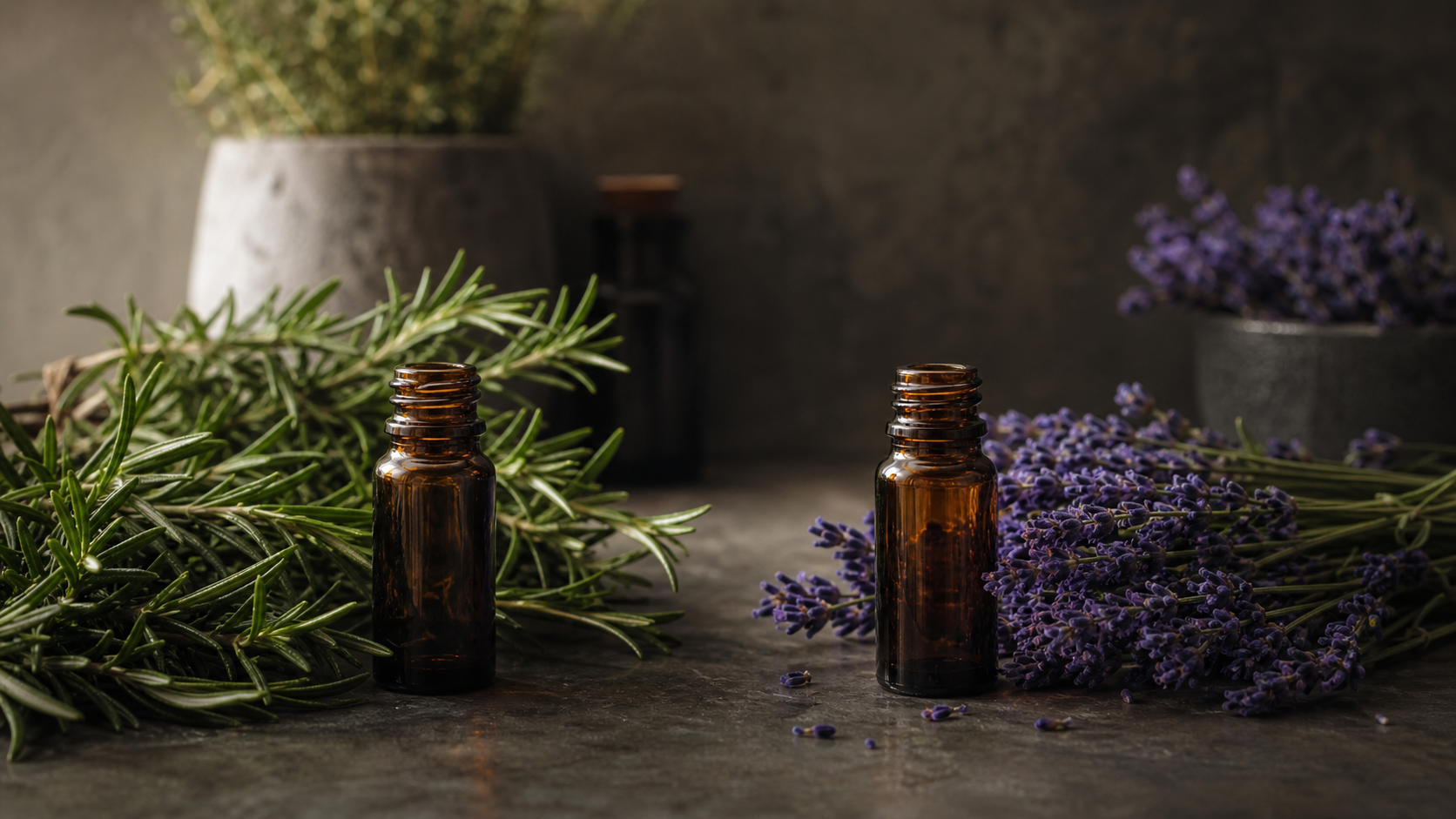
Can I use rosemary oil instead of lavender oil for hair?
Rosemary has more direct human data as a single named oil; lavender’s human hair evidence comes from multi-ingredient formulas. Neither choice replaces diagnosis or established treatment for a hair-loss condition.
| Evidence | Rosemary | Lavender |
|---|---|---|
| Direct human data | In a 2015 trial of 100 people with androgenetic alopecia, rosemary and 2% minoxidil groups both had higher hair counts at month 6, with no significant difference between groups. | Human results come from a 1998 four-essential-oil blend and a 2025 multi-ingredient rosemary–lavender product. |
| Aroma | Fresh, strong and herbaceous | Softer, floral and calming |
| Evidence limit | One six-month comparative trial does not answer every type of hair loss. | The available trials cannot isolate lavender’s individual contribution. |
Sources: Rosemary oil vs 2% minoxidil (2015) · Four-essential-oil trial (1998) · Rosemary–lavender product trial (2025)
Which carrier oil works best with lavender oil for hair?
Jojoba is a practical starting point for the scalp because it feels relatively light. Argan can suit dry lengths, while fractionated coconut oil spreads easily. Choose one carrier oil, keep the dilution low and shampoo thoroughly.
Continue with the complete lavender guide
Explore everyday uses, exact recipes and practical safety tips.
Continue the lavender guide
Sources: NCCIH: Lavender—Usefulness and Safety · Randomized multi-oil alopecia areata trial · Rosemary–lavender randomized trial · Rosemary oil vs minoxidil · MedlinePlus: Topical minoxidil · American Academy of Dermatology: Hair-loss signs. Educational information only; not a diagnosis or treatment.